
Kostos: escaping the crowds
During the feast of Osios Athanasios Parios on 24 June, or during the souma season in autumn, enjoy a visit to a family-run coffee house in Kostos, a village located along old trails that lead from Parikia and cross Paros all the way to the sea.
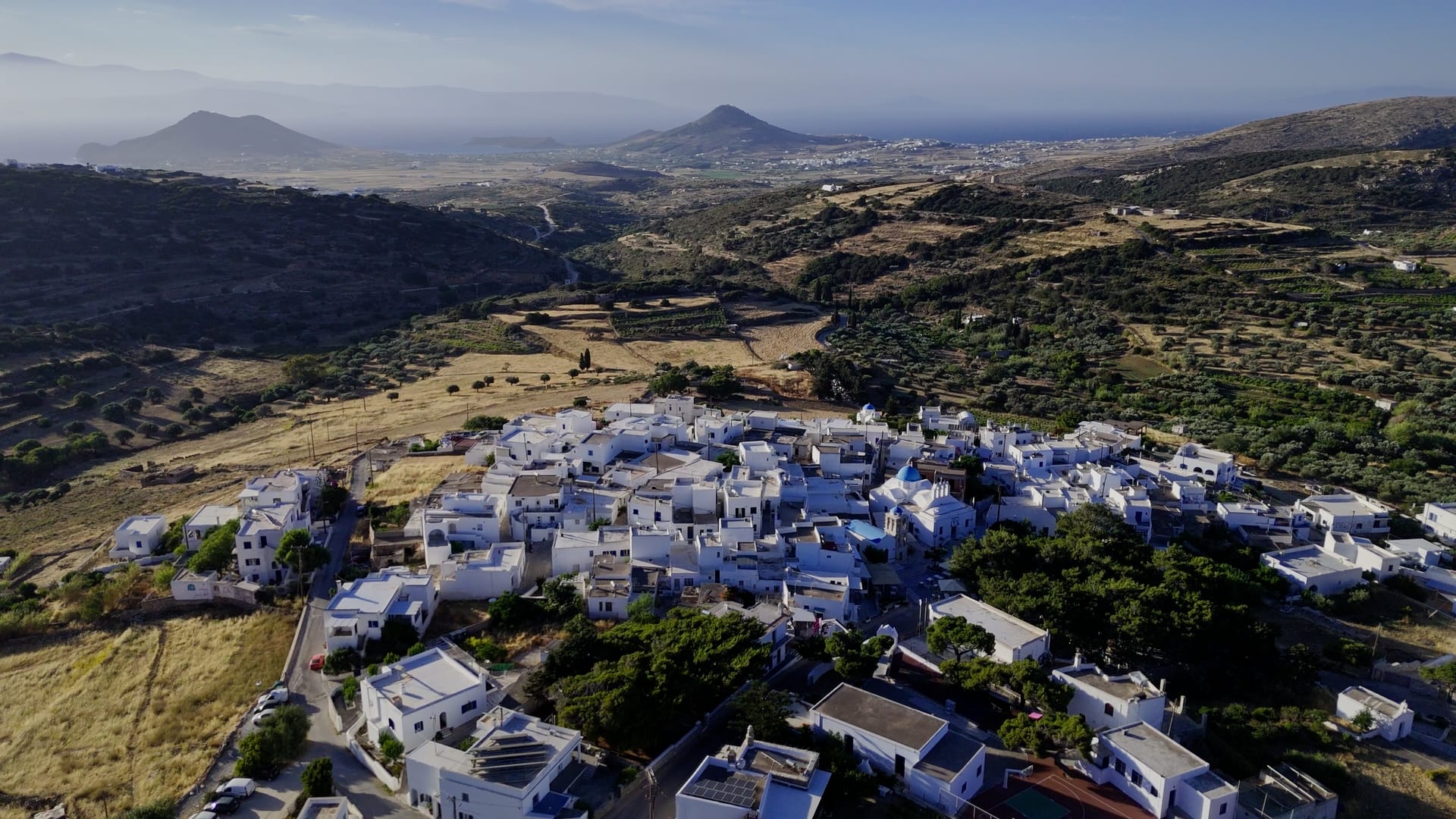
At an elevation of 160 m and 7 km up from Parikia, Kostos is surrounded by the usual Cycladic landscape of dry terraces, olives and scrub, with marble quarries further up the hill, and Molos Bay and Naxos visible below. An exception is the dark mass of pine trees around the church and square. Thanks to the trees and the altitude, the village is noticeably cooler than the coast.

A walking crossroads
The network of Byzantine and post-Byzantine paths that cross Kostos is well worth exploring: they were the island’s main means of communication, for people and goods, linking Parikia with the villages in the mountains and the ports on the east for nearly a thousand years, centuries before the introduction of the modern, tarred road.
The main line of the network still runs from Parikia through Marathi, Lefkes, Prodromos and Marpissa down to Piso Livadi. That is 19 km, roughly six hours, waymarked and not too hard. If you only want a taste of it, walk the stretch between Lefkes and Prodromos. It’s 3.5 km of Parian marble paving laid around AD 1000, the best-preserved piece of the whole system, 45 minutes and mostly downhill.
At Marathi, you can visit the galleries where lychnites, the translucent marble prized by classical sculptors, was quarried and shipped throughout the ancient world. It was mined from around 3200 BC until the 19th century. Two old quarries, the Quarry of the Nymphs and the Quarry of Pan, pierce the hill above the Skarpathiotis valley. Since 2022, work has been under way to make the area into an archaeological park; a new non-profit set up by six Parian associations is organising the project in cooperation with the municipality and the Ministry of Culture.
Kostos is unlikely to take up a whole day, but the walks out of it are the antidote to Paros in August. The sounds of tourists disappear. It’s all very calming. Just the smell of olive trees, and birds somewhere in the distance.
A stroll through Kostos
It will take 10–20 minutes to stroll around all the alleys, which are nothing like the immaculately scrubbed white lanes of Naoussa. Lots of walls are bare stone with the mortar showing in the joints. Shutters are of weathered wood. The white paint between the flagstones has been applied by the people who live behind the doors. The village looks lived-in.
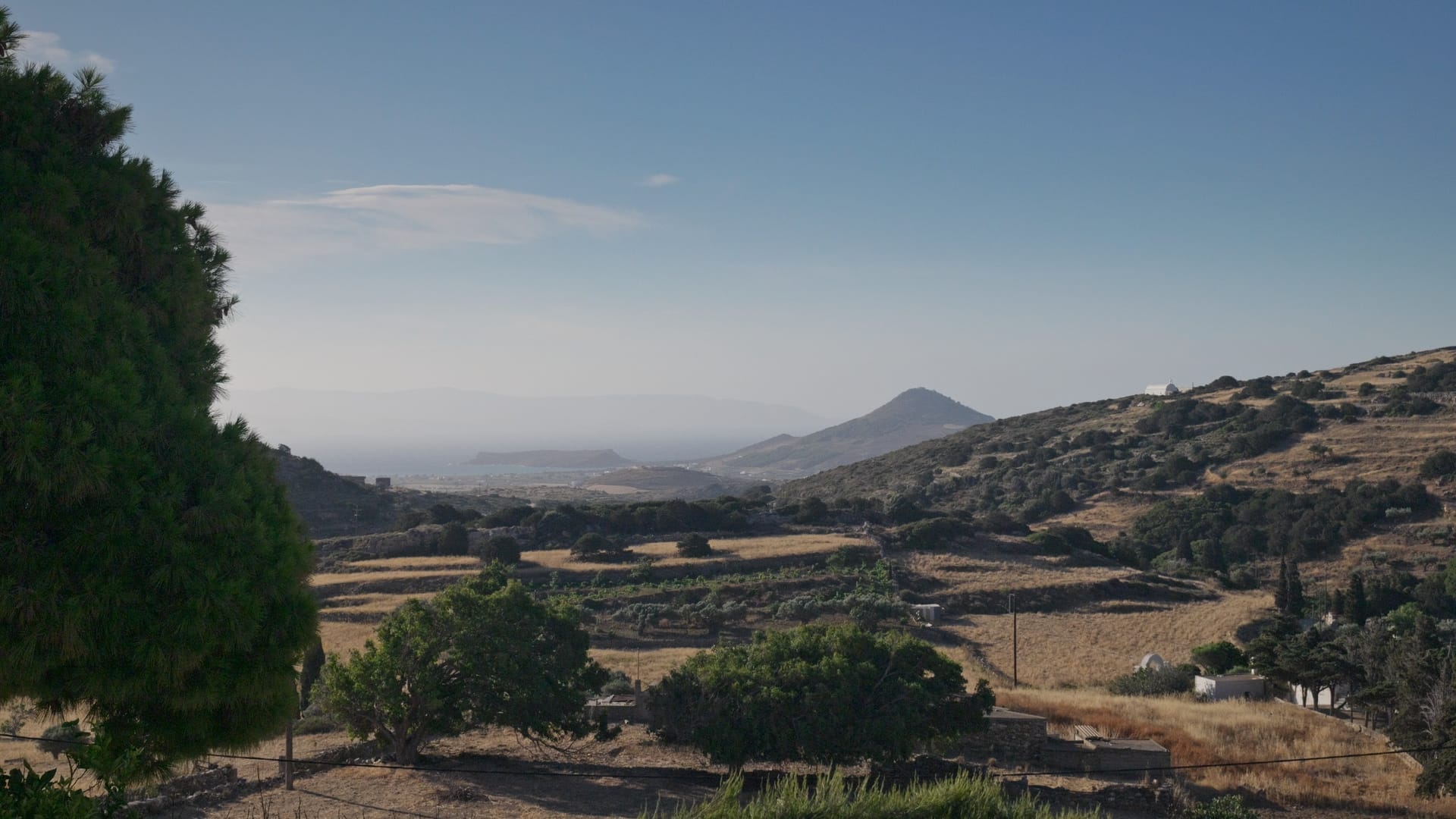
Here and there the houses open out and give you the view down towards Molos: the valley below, the terraced fields and the conical hill of Kefalos. Beyond the last houses of the village stand the old laundries, the stone washing places the women of Kostos used before the village had running water. Worth the walk if you’re pottering about the village, if only to see how hard the work used to be.


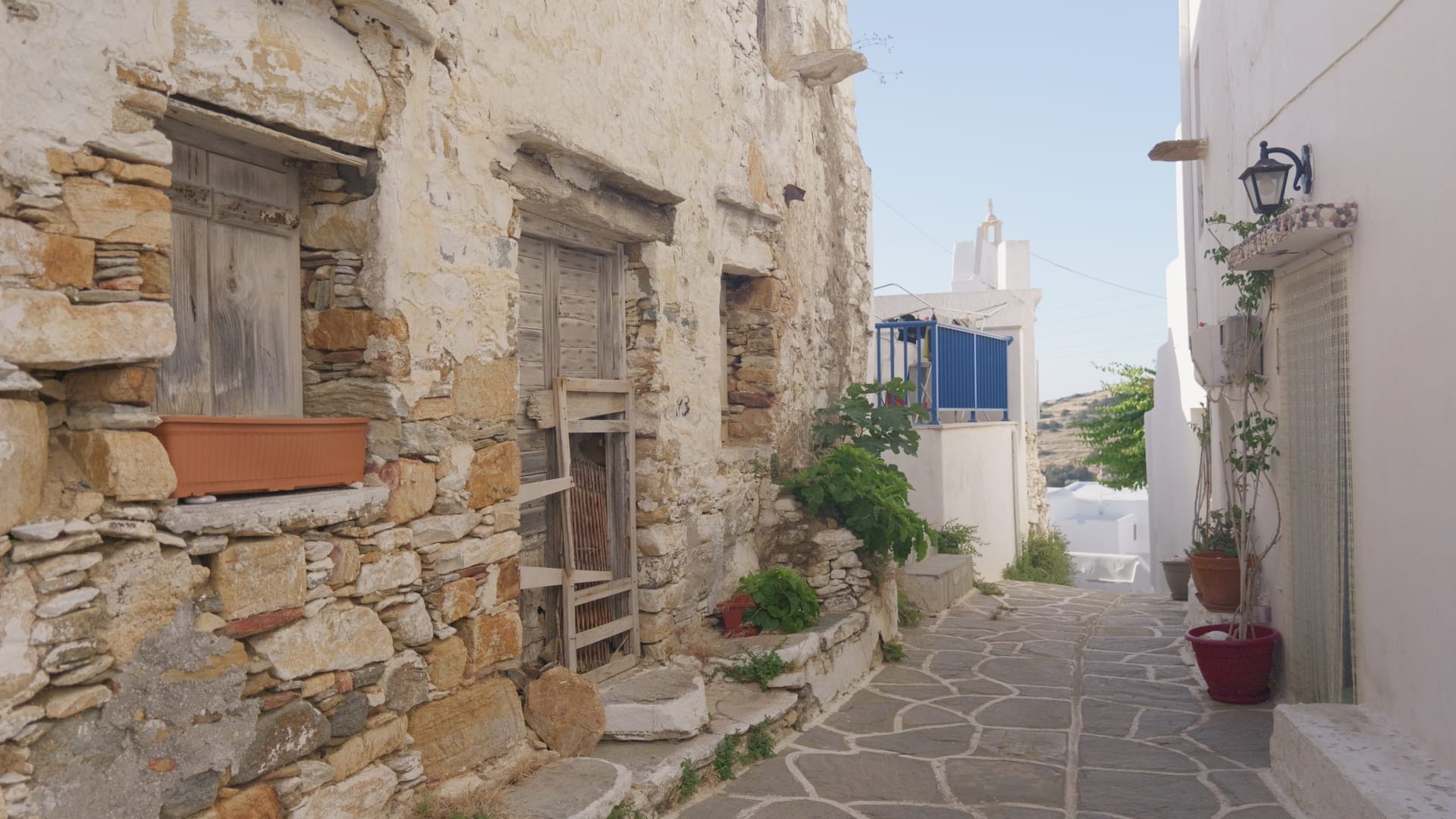
It will take 10–20 minutes to stroll around all the alleys, which are nothing like the immaculately scrubbed white lanes of Naoussa. Lots of walls are bare stone with the mortar showing in the joints.
Savour the Local Cuisine
While in Kostos, you can visit the traditional taverna nestled beneath the pine trees. Additionally, there are two Kafenions situated in the town square that offer a delectable selection of mezes. You will want to take advantage of the opportunity to sample the simple and flavourful local specialities and wines, all while experiencing the local warm hospitability.
Comfortable Stay Options
As Kostos is a small village, accommodation options may be limited. Yet, you'll find a few charming rentals, some run by local families. Staying in such places provides a unique chance to experience genuine Greek hospitality. To reduce your environmental footprint, consider reusing towels, saving water, and switching off lights when leaving the room.
The Great Outdoors
Kostos is surrounded by beautiful natural landscapes that are perfect for outdoor lovers. Take advantage of the numerous hiking trails through olive groves and vineyards. Sticking to marked trails will ensure you have a great time while protecting the local ecosystem.
Kostos is the perfect place to experience the timeless charm of Greek island life at its most authentic. It's an ideal retreat from the more bustling areas of Paros, offering peace, tradition, and a friendly local community. This hidden gem truly is a breath of fresh air for any traveller.
Three feast days
Kostos celebrates three feasts: Agia Marina on 17 July and Agios Panteleimon, the village’s patron saint, on 27 July. The third, on 24 June, is Kostos’s own, a celebration of Osios Athanasios Parios, who was born in the village in about 1721. He was an educator and leader of the school in Chios. He taught in Thessaloniki and, after Neophytos Kausokalyvites, led the Kollyvades, a traditionalist movement that began among the monks of Mount Athos. In the centre of the village there is a monument in his memory.
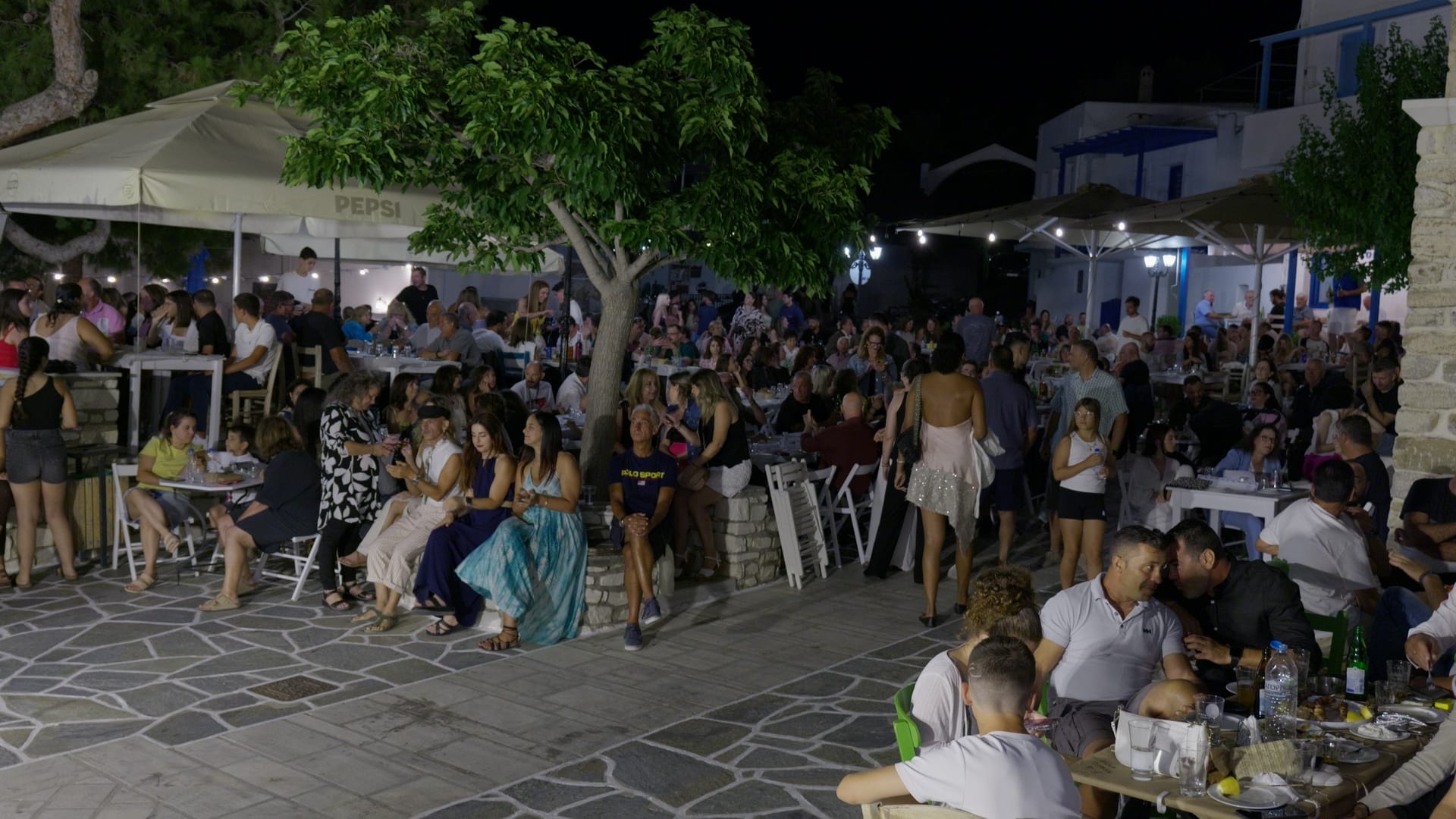
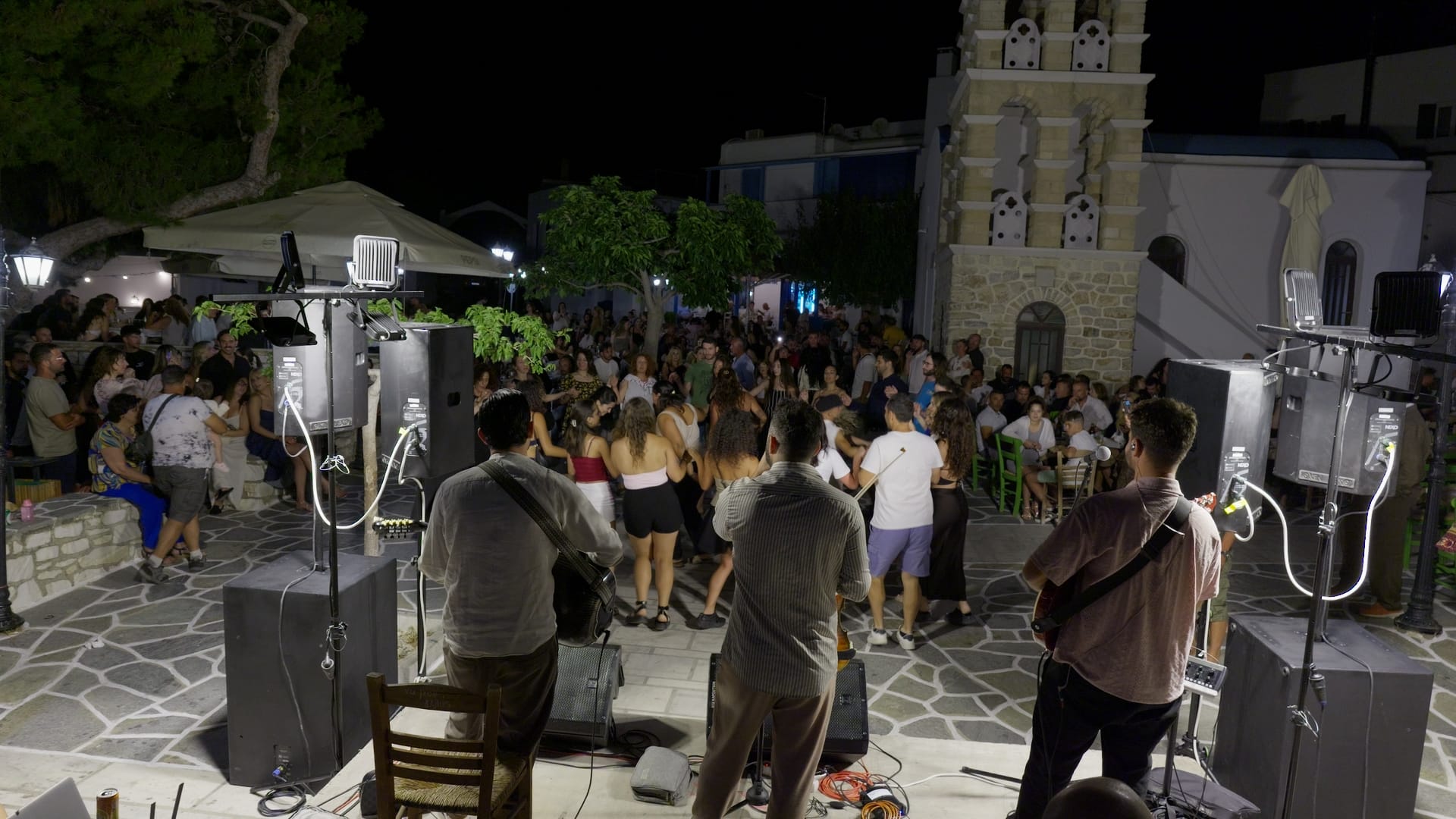
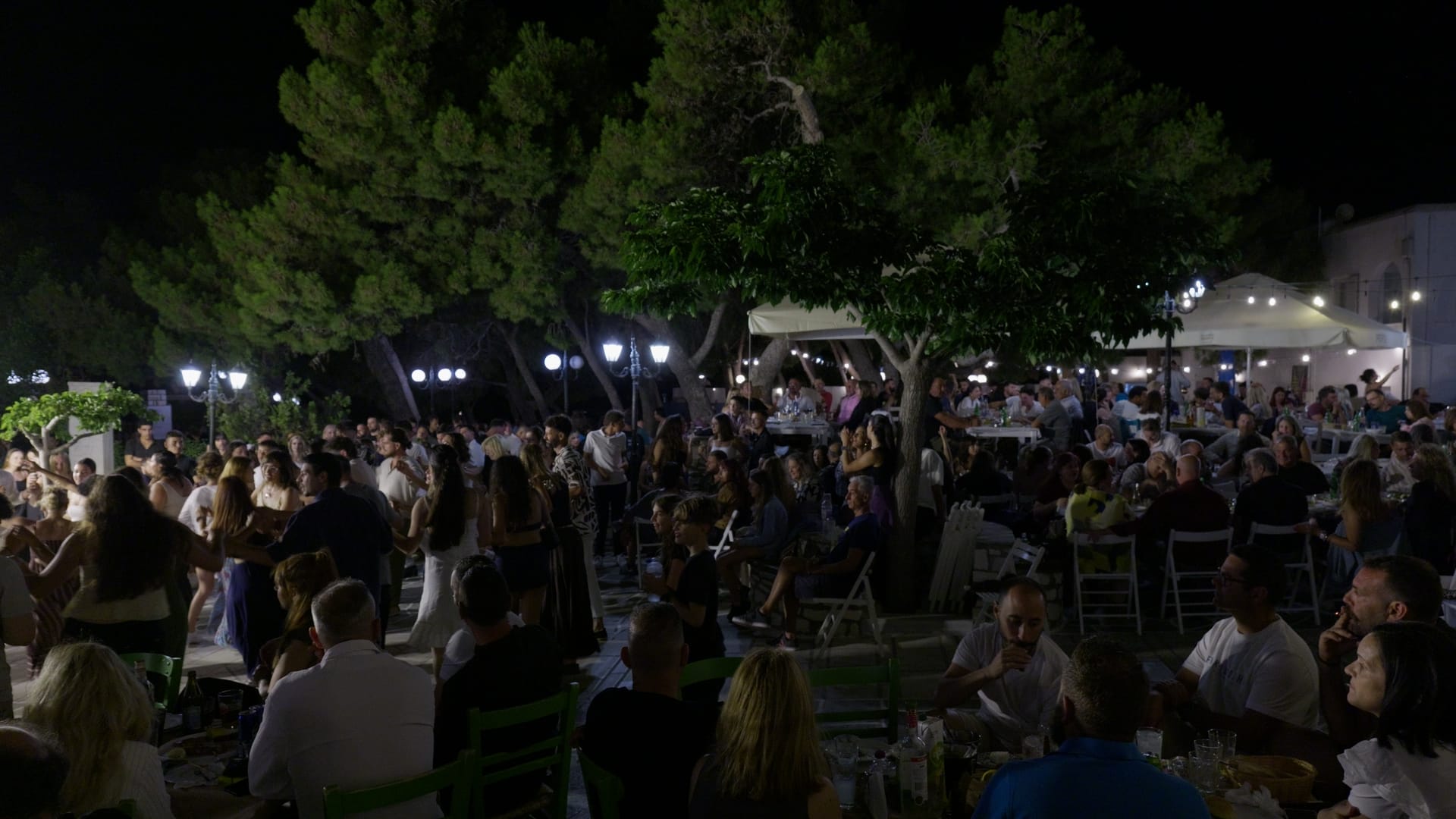
As the evening goes on the band plays faster, more join in, and the ring in the middle of the crowd takes in every age in the village. © digitalparos
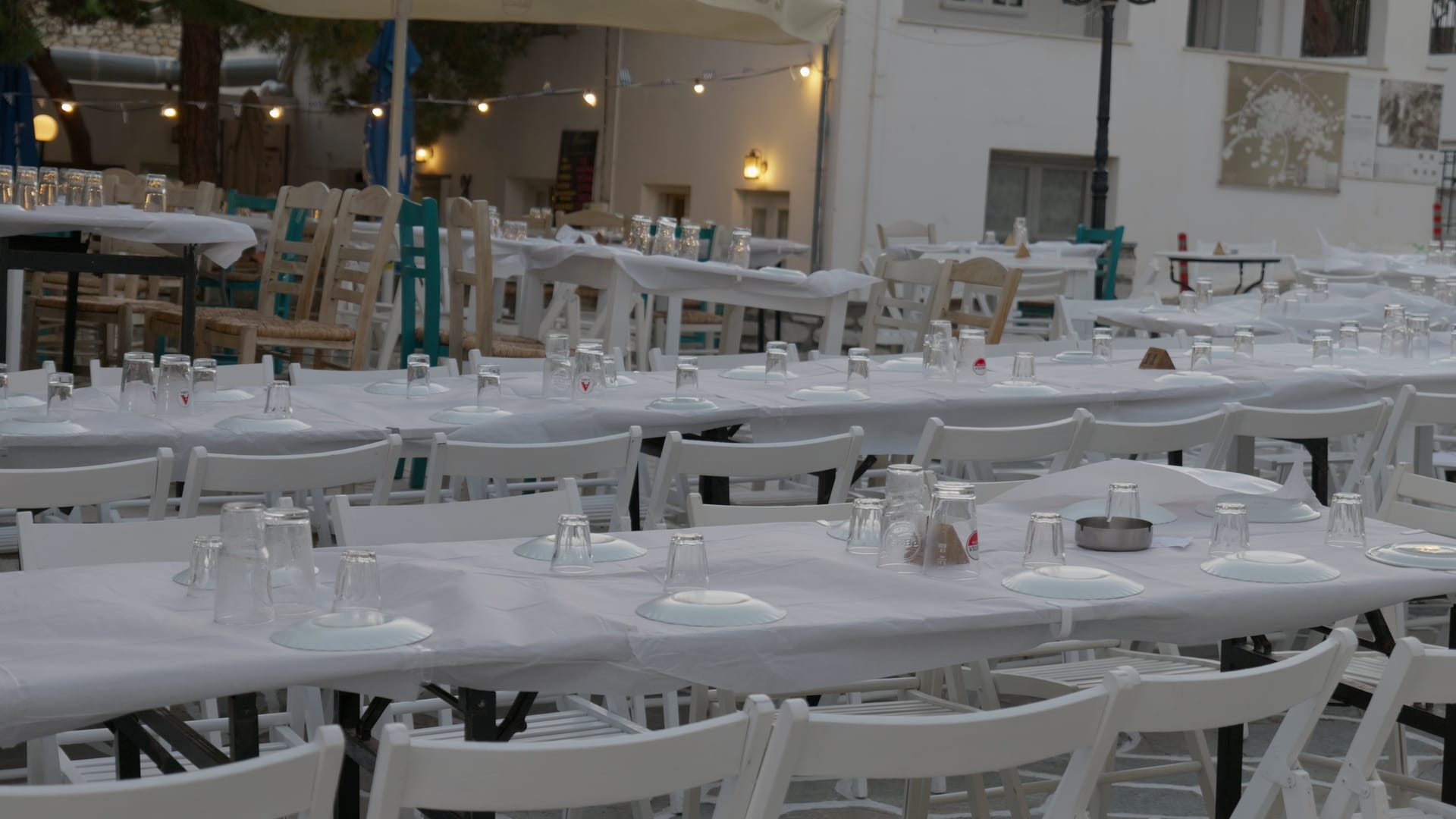
Trestle tables are set up end to end in the square in the early evening, papered and laid with plates and upturned tumblers, waiting for the guests. Lights are strung from the pines, and the band sets up facing the bell tower, violins and guitars through a sound system sized for the whole village. By dark, both kafenia (the village coffee houses) and the square are full. A few people start the dancing in front of the band, usually children and young girls. Kids run around the tables, and older people sit and listen and talk. As the evening goes on the band plays faster, more join in, and the ring in the middle of the crowd takes in every age in the village.
Where to eat
There are two kafenia by the square. Kostos (Ο Κώστος), which faces it, has been going since 1965 and is owned by the Baliou family, who make most of what they serve: mezedes (small plates to share), wine and spirits. Just around the corner is Karavos (Κάραβος), run by the Roussou family. You can sit here an hour over one coffee and no one will bat an eyelid.
At the end of October and into November, locals set up the kazania (distilling kettles), bring their fermented concoctions and wait their turn. Distilling becomes a night-long party. Souma (σούμα), known as tsikoudia in Crete and tsipouro in Thessaly, is a grape spirit made from the pulp of grapes that have been pressed for wine, and it’s something we recommend trying after a good meal. It’s strong, and the strength differs by household: anywhere from 45% to 65%. Since it isn’t made for supermarkets, it carries no branding.
Where to stay
When searching for accommodation in Kostos online you’ll currently find around 12 options, including apartments, villas and a suite. Many have a pool and few reviews. Most seem to be new additions. So take a closer look at those listings and see for yourself whether they are run by a local family, if that’s important to you. (Which it should be.)
Giorgos Bafitis, a hotelier and president of DEYAP, the municipal water company, told us during an interview in August 2024 that water use on Paros had risen by 30% in a year, mainly because of the new villas and their pools. So please be mindful: reuse towels, use as little water as possible and switch off the lights when you leave.
Walking out of the village
There are three marked trails that start from the village, the easiest of which is a 6 km, almost entirely downhill route to Naoussa. Allow an hour and a quarter to walk there, and make sure of the way back before you go, by car or by bus, because it is not a circular route.
From Kostos, walk along the tarred road towards Parikia for seven minutes until you reach the tiny church. Take the signposted path that leads downhill, passing terraces overlooking Naoussa Bay and Mykonos. Continue to the village of Matzoro, take the middle track, which is the dirt road, and then the track on the left. After 800 m along the ravine you’ll catch sight of Naoussa.
Both of the longer routes take a full day and finish with an opportunity for a swim in the sea. The route from Kostos to Parikia is 12.8 km with 558 m of ascent and 700 m of descent and reaches a maximum altitude of just under 500 m. The route from Kostos to Santa Maria is 12.6 km and the trail listings rate it easy, but don’t be fooled. It’s easy in terms of the trails used but is certainly not flat. It too crosses the spine of the island.
Always carry plenty of drinking water. And don’t set out at midday in July or August: Kostos might feel cool enough when you leave it, but all three routes end at sea level, so the last hour is the hottest. The island is best walked from April to early June and from September into November, which is also when the hillsides are worth looking at. In a good year you can keep going to late December, because there are often summery days that late. If you want a guide, Paros Hikes run walks in English and French, on foot or combined with bikes.
Kostos is unlikely to take up a whole day, but the walks out of it are the antidote to Paros in August. The sounds of tourists disappear. It’s all very calming. Just the smell of olive trees, and birds somewhere in the distance.


